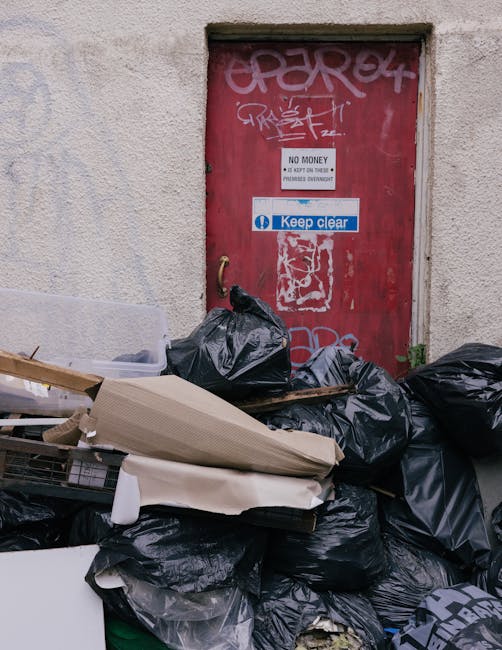
SE21 Flat Rubbish Removal Costs: What to Know Before Booking
Flat rubbish removal in SE21 can seem straightforward until you start asking what actually changes the price. Is it the number of items, the access, the time on site, or the type of waste? In practice, it is usually a mix of all four. If you live in Dulwich or nearby and you are trying to clear a flat, a studio, a top-floor maisonette, or a rental between tenancies, it helps to understand the pricing logic before you book. That way, you avoid awkward surprises, get a fairer quote, and choose the right service for the job.
This guide breaks down SE21 flat rubbish removal costs what to know before booking in plain English. We will look at the main cost drivers, common mistakes, compliance points, and the questions worth asking before anyone turns up with a van. If you have ever looked at a pile of old furniture, broken bits from a DIY job, and three bags of general junk and thought, "Right... where do I even start?", you are in the right place.
Why SE21 flat rubbish removal costs what to know before booking Matters
Flat clearance is rarely just "take the rubbish away." In SE21, the pricing often reflects the practical realities of working in flats and apartment buildings: stairs, parking limits, narrow hallways, shared entrances, lift access, and the simple fact that waste may need to be carried further than it would from a house. That extra effort matters. It takes time, manpower, and sometimes more careful planning than people expect.
Knowing the cost factors before booking helps you compare quotes properly. A cheap-sounding price can be fine if it includes labour, loading, disposal, and VAT where applicable. But if one quote is vague and another is specific, the vague one is the one that usually causes the headache later. Let's face it, nobody wants a "starting from" price that doubles when the team arrives.
There is also a trust angle. Flat rubbish removal can include mixed waste, heavy furniture, electrical items, or awkward pieces like wardrobes, sofa beds, and old appliances. The more clearly you describe the load, the more accurate the booking will be. A provider with clear pricing and a sensible process is usually easier to deal with than one trying to do everything by text message and guesswork.
If you are planning a broader property clear-out, it can be helpful to understand the provider's wider service range too. For example, some people pair a flat clearance with house clearance, home clearance, or even furniture disposal when the job goes beyond a few loose items.
How SE21 flat rubbish removal costs what to know before booking Works
Most flat rubbish removal services use a volume-and-labour model. In plain terms, you are usually paying for how much space the waste takes up, how hard it is to remove, and whether anything needs special handling. The first point matters a lot, but it is not the only point. Two loads of the same size can cost differently if one is stacked neatly by the door and the other is on the third floor, split across three rooms, and blocked by furniture that has to be moved first.
Here is the usual flow. You describe the waste, give the postcode, explain access, and share any details that affect loading. The team may ask for photos. That is normal. Photos reduce guesswork and make the quote more accurate. After that, you agree the price, book a slot, and the team arrives to assess, load, and remove the waste. Some services quote on arrival if the details are unclear. Others prefer a firm quote upfront. Both approaches can work, but clarity is the thing that protects you.
In SE21, access is often the quiet price driver. A ground-floor flat with direct parking is a very different job from a fourth-floor walk-up with a long internal corridor and no lift. If the team has to carry items a long way, it takes longer and can require more people. That does not mean you will be overcharged. It simply means the quote should reflect the work involved.
Waste type matters too. General household junk is simpler than electricals, mattresses, fridges, or anything classed as hazardous. If your load includes items that need specialist disposal, ask about those before booking. A good operator will explain what is accepted and what may need separate handling. If you want to check item categories in advance, the guide on what can go in a skip can be a useful reference point for the kind of waste that often raises questions, even when you are not hiring a skip.
Key Benefits and Practical Advantages
Booking a flat rubbish removal service in SE21 is not only about getting rid of clutter. Done properly, it saves time, reduces strain, and takes a lot of stress out of the process. There is something oddly satisfying about seeing a flat go from "how on earth did this happen?" to clear and usable again. You can hear the echo in the room afterwards. Slightly dramatic, but true.
- Less lifting and carrying: Heavy furniture and bagged waste are moved for you, which is especially useful in flats with stairs.
- Faster turnaround: A clearance team can often complete in one visit what might take you a whole weekend.
- Cleaner handover: Useful for landlords, letting agents, tenants at the end of a tenancy, and anyone preparing for decorating.
- Better sorting: Reusable or recyclable items can often be separated more efficiently than if you handle everything in a rush.
- Less disposal confusion: You do not have to figure out where different materials should go.
The practical advantage is not just convenience. It is also timing. If you are working around a move-out date, tradespeople, or a building manager with narrow time windows, a smooth clearance can save the day. And yes, sometimes the difference between a calm afternoon and a total mess is just whether the waste has been dealt with before the paint tins arrive.
For bigger clearances, it may also help to look at related services such as flat clearance, waste removal, or furniture clearance if you need a broader solution than a simple one-off collection.
Who This Is For and When It Makes Sense
This kind of service makes sense for a fairly wide group of people. If you are thinking, "That is me," you probably already know the flat is getting in the way of everything else.
- Tenants moving out: Ideal when you need to clear leftover items, broken pieces, or rubbish before the final handover.
- Landlords and letting agents: Useful after a tenancy where items have been left behind.
- Homeowners in SE21: Handy for spring clear-outs, downsizing, or getting a flat ready for sale.
- People dealing with bereavement: Clearance work can be emotionally heavy, so having practical support matters.
- Anyone with bulky items: Sofas, beds, wardrobes, white goods, and mixed junk all tend to become a logistical faff.
It also makes sense if access is awkward. A lot of people assume a small flat means a small job. Not necessarily. One compact room can still hold a sofa, a mattress, two armchairs, and a lot of boxed clutter. That can be more work than a larger space with better access.
For furniture-heavy jobs, services such as mattress and sofa disposal or fridge and appliance removal may be more appropriate than general waste collection. Matching the job to the right service tends to keep the price cleaner and the whole process less stressful.
Step-by-Step Guidance
- List everything that needs to go. Split it into bulky items, bagged rubbish, electricals, and anything potentially hazardous. This keeps the quote more accurate.
- Take clear photos. Include the full room if possible, plus close-ups of awkward items. Try to show how much space the waste occupies.
- Check access details. Mention stairs, lifts, parking restrictions, narrow entrances, and any time limits from the building.
- Ask what is included in the price. Confirm labour, loading, disposal, and any extra charges before you accept the booking.
- Confirm item restrictions. Some waste types need separate handling. Ask early rather than finding out on the day.
- Choose a sensible time slot. If you share a building, a quieter collection window can make life easier for everyone.
- Prepare the items if you can. Bag loose rubbish, unplug appliances, and keep routes clear where possible. Small thing, but it helps.
- Be available for a quick check-in. A few minutes at the start can prevent misunderstandings later.
The biggest tip? Do not underdescribe the job. People often try to be cautious and say there is "just a bit" of rubbish. Then the team arrives and there is a small mountain of it. Be honest about the load. It saves everyone time.
Expert Tips for Better Results
Over the years, the smoothest flat clearances share a few common habits. Nothing glamorous. Just sensible preparation.
Tip 1: Group similar items together. Put furniture in one area and bagged rubbish in another. Even if the team is handling the lifting, simple grouping speeds up the work and can reduce confusion.
Tip 2: Flag anything unusual. A washing machine with a stuck hose, a fridge, paint tins, or a heavy mirror should be mentioned in advance. Surprises are what usually create delays, and delays nudge prices upward.
Tip 3: Ask how quotes are calculated. Some providers are volume-led, some are load-based, and some weigh up access and labour more heavily. There is no single universal model, so ask how the quote is built.
Tip 4: Keep building rules in mind. If your flat has management restrictions, loading bay rules, or time windows, tell the provider before booking. A team can only work around the building if they know the building exists in the first place. Sounds obvious, but you would be surprised.
Tip 5: Don't wait until the last minute if you can help it. Same-day removal is sometimes possible, but planned bookings usually give you more choice and less pressure. That calm feeling on the morning of the collection, when everything is already lined up, is worth a lot.
If you want to compare service information before you book, the pages on pricing and quotes and payment and security are sensible places to look because they help set expectations around cost and how the booking process works.
Common Mistakes to Avoid
- Focusing on the headline price only. A low quote is not necessarily a good quote if it excludes labour, access issues, or disposal.
- Forgetting about access. Two flights of stairs, a tight hallway, or limited parking can change the job quite a bit.
- Mixing restricted waste in without warning. Electricals, fridges, and hazardous materials may need separate handling.
- Not checking what happens with reusable items. If you care about reuse or recycling, ask about it before booking.
- Leaving the whole sort-out until collection day. That is where people often lose time, and time is money.
One particularly common issue is assuming the team will sort through an unidentified heap in the hallway with no context. They can do a lot, yes, but they still need clear information. A decent booking should feel organised, not improvised.
Another mistake is overlooking insurance and safety. If the work involves heavy lifting, awkward manoeuvres, shared entrances, or fragile flooring, it is worth understanding how the provider approaches care and protection. The page on insurance and safety is useful for that sort of reassurance.
Tools, Resources and Recommendations
You do not need specialist kit to prepare for a flat rubbish removal booking, but a few simple tools make life easier:
- Phone camera: Use it to take clear photos for the quote.
- Marker or sticky notes: Great for labelling items you want removed versus kept.
- Strong bags or boxes: Helpful for loose household waste.
- Basic tape measure: Useful if you are unsure whether a bulky item will fit through a doorway or lift.
- Notebook or notes app: Handy for listing items, especially in mixed clearances.
From a service-selection point of view, think about the type of waste first and the access second. If the job is mainly furniture, a furniture-focused service may make more sense. If it includes clutter from a whole room or entire flat, broader clearance support is often the better fit. For home-based clear-outs, related options such as loft clearance, garage clearance, and office clearance can also be worth comparing depending on what you are clearing.
And if the job is part of a larger property refresh, the sustainability angle is worth asking about too. Look at recycling and sustainability to understand how waste is typically handled once it leaves the flat. It is a small detail, but a meaningful one for many people.
Law, Compliance, Standards, or Best Practice
With rubbish removal, the compliance side matters because waste is not just "stuff to get rid of." In the UK, waste has to be handled responsibly, and anyone arranging disposal should be comfortable asking what happens after collection. You do not need to become a legal expert, but it is sensible to know the basics.
Good practice usually means the provider can explain how waste is transported, sorted, and taken to appropriate facilities. If there are electricals, appliances, or materials that could be classed as hazardous, they should be handled separately and with care. That is especially relevant in flats, where items are often mixed together and difficult to sort later.
You should also think about building rules and local practicalities. In shared buildings, there may be loading restrictions, lift booking rules, or noise considerations. A professional approach respects those limits rather than treating them as a minor annoyance. That is just good practice, really. And from a customer point of view, it usually prevents avoidable friction.
Documentation is another sign of a reliable operator. Clear quotes, clear scope, and clear payment terms all help you understand what you are agreeing to. For many customers, the page on terms and conditions is worth a quick read before confirming anything. Not thrilling, perhaps, but useful.
Options, Methods, or Comparison Table
If you are deciding how to clear a flat in SE21, you generally have a few routes. The right one depends on the volume of waste, how quickly it needs doing, and how much lifting you want to avoid.
| Option | Best for | Typical strengths | Things to watch |
|---|---|---|---|
| Man and van rubbish removal | Mixed flat waste, bulky items, quick turnaround | Fast, flexible, labour included | Price depends on access and load size |
| Skip hire | Longer DIY jobs or ongoing clear-outs | Good if you are generating waste over time | Parking, permits, and loading limits can be awkward in flat settings |
| Self-haul to a facility | Small loads and people with transport | Potentially low direct cost | Time, lifting, vehicle space, and disposal rules become your problem |
| Full flat clearance | End-of-tenancy or larger property clear-outs | Comprehensive, less hassle, better for full rooms or whole flats | Usually more expensive than removing just a few bags |
For many SE21 flats, a removal team is the most practical choice because access can be the hardest part. A skip may be fine in some cases, but if you live in a building with limited parking or strict rules, it can become a faff very quickly. Not impossible, just inconvenient.
Case Study or Real-World Example
A common SE21 scenario looks like this: a two-bedroom flat needs clearing after tenants move out. The waste includes a broken chest of drawers, a mattress, several bags of mixed rubbish, an old TV, and a small number of kitchen items left behind. On paper, it sounds like a modest job. In practice, it takes planning because the flat is on the second floor, the stairwell is narrow, and parking is limited to a short loading window.
The best outcome usually comes from giving the provider a full list, adding photos, and being honest about access. If the quote is based on accurate information, the job tends to move quickly on the day. The team can bring the right vehicle size, plan the loading route, and avoid having to renegotiate halfway through.
That sort of clear handover is where people save money without trying to "haggle" in the awkward, unclear way that nobody enjoys. You are not trying to squeeze the price. You are trying to make the quote accurate. Different thing.
In a similar case, a landlord chose to split the work into two parts: furniture first, then the leftover mixed waste. That was useful because the bulky items filled most of the vehicle space, and separating the jobs made the final scope easier to understand. It was not fancy, just sensible.
Practical Checklist
- List every item you want removed.
- Take photos of the waste and the access route.
- Note floor level, lift access, stairs, and parking restrictions.
- Ask whether labour and disposal are included.
- Check if appliances, mattresses, or electricals need special handling.
- Confirm the booking window and expected arrival time.
- Make sure any building rules are shared in advance.
- Separate anything you want to keep before the team arrives.
- Ask how the company handles recycling and reusable items.
- Read the booking terms so you know what happens if the job changes.
Expert summary: The best SE21 flat rubbish removal quotes are the ones based on clear photos, honest access details, and a proper description of the waste. That simple trio does most of the heavy lifting before the van even arrives.
If you are still comparing providers, it can also help to learn more about the company itself and how it works. Pages like about us and book online are useful for understanding the service journey and making a booking when you are ready.
Conclusion
SE21 flat rubbish removal costs what to know before booking really comes down to one thing: clarity. The more clearly you describe the waste, the access, and the timing, the more likely you are to get a fair, realistic quote. That is true whether you are clearing a single room, an entire flat, or a mixture of furniture and general junk after a move.
Pay attention to the price structure, ask what is included, and do not ignore the small details like stairs, parking, or awkward items. Those are the bits that change the experience. A thoughtful booking is usually cheaper, smoother, and far less stressful than a rushed one.
And if you are at the point where the flat just needs to be cleared so you can breathe again, that is perfectly understandable. Sometimes the nicest thing you can do is simply get the clutter out and move on with your day.
Get a free quote today and see how much you can save.
Frequently Asked Questions
How much does flat rubbish removal in SE21 usually cost?
The cost depends on how much waste you have, how easy it is to access the flat, and whether the items need special handling. A small load with straightforward access will usually cost less than a bulky, mixed load from an upper floor.
What makes SE21 flat rubbish removal more expensive than a house clearance?
Flats often involve stairs, limited parking, longer carrying distances, and access restrictions. Those practical issues can add labour time, which affects pricing even if the waste volume is similar.
Should I send photos before booking?
Yes, absolutely. Photos usually help produce a more accurate quote and reduce the chance of surprises on the day. A few clear images are often better than a long description.
What if I only have a few items?
Small jobs are still worth quoting properly. Sometimes a minor collection is better handled as part of a minimum charge or combined with another clearance. It is worth asking rather than guessing.
Can I include a mattress or sofa in the same booking?
Often yes, but it is best to mention bulky furniture early. Items like mattresses and sofas can affect loading space and may have specific disposal requirements.
Are fridges and appliances accepted?
Sometimes, but they may need separate handling. Fridges, freezers, and similar appliances should always be declared in advance because they are not treated like ordinary rubbish.
What should I do before the team arrives?
Clear a path, separate items you want to keep, and make sure the provider has accurate access details. If you can bag loose rubbish and group the items, that helps too.
Can rubbish removal be done from a top-floor flat without a lift?
Yes, but that usually needs to be reflected in the quote. Upper floors with no lift mean more carrying and more labour, so it is important to mention that before booking.
Is there a difference between rubbish removal and flat clearance?
Yes. Rubbish removal is often a collection of waste and unwanted items, while flat clearance can be more comprehensive and may involve clearing whole rooms or the entire property.
How do I know if a quote is fair?
A fair quote should explain what is included, how the waste is being assessed, and whether access or special items affect the price. If the price feels vague, ask for more detail before agreeing.
Do I need to sort recyclable items myself?
Not always, but it helps to ask how the provider handles recycling. Many customers prefer their waste to be sorted properly, especially for furniture, appliances, and mixed household items.
What is the best time to book a flat rubbish removal?
Whenever possible, book before your deadline becomes urgent. Planned bookings are easier to coordinate than last-minute ones, especially in flats where access and parking can be tight.
Can I book rubbish removal for a rental property between tenants?
Yes, and that is one of the most common reasons people use the service. It is especially useful when previous occupants have left items behind or when the flat needs clearing quickly for cleaning or repairs.
What if I also need help with a broader property clear-out?
If the job is bigger than a flat rubbish collection, it may be worth looking at related services such as office clearance or builders waste clearance depending on the type of material involved and the scale of the task.